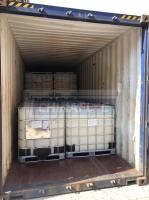
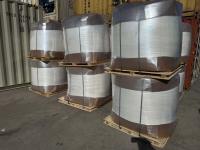
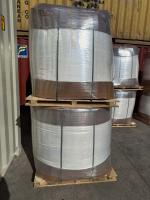
Our Products
Polyacrylamide / equivalent of anionic polyarylamide ZETAG 4145 be replaced by Chinafloc A
305_small.jpg "equivalent of anionic polyarylamide ZETAG 4145 be replaced by Chinafloc A")


ZETAG 4145 is a high–molecular weight anionic polyacrylamide flocculant specifically developed for efficient solid–liquid separation in demanding industrial environments. With its optimized anionic charge density and long polymer chains, ZETAG 4145 exhibits excellent adsorption and bridging properties, enabling it to aggregate fine suspended particles into large, dense, and fast-settling flocs. Because of its chemical stability, wide pH tolerance, and consistent performance, ZETAG 4145 is widely applied in mining, mineral processing, alumina refining, industrial and municipal wastewater treatment, sludge dewatering, and energy-related industries.
One of the most important application areas of anionic polyacrylamide ZETAG 4145 is mining and mineral processing, particularly in tailings thickening, clarification, and water recovery systems. During crushing, grinding, flotation, and classification, mining operations generate large volumes of slurry containing ultra-fine mineral particles. These particles often remain suspended for extended periods due to their small size and surface charge, limiting natural sedimentation.
ZETAG 4145 adsorbs onto mineral particle surfaces and forms polymer bridges between multiple particles, resulting in large, compact flocs. These flocs settle rapidly in thickeners and clarifiers, significantly improving settling rates and thickener throughput. In copper, gold, iron ore, coal, phosphate, and bauxite mining, ZETAG 4145 helps increase underflow solids concentration and produce clearer overflow water. Improved clarification enables efficient recycling of process water, reduces freshwater consumption, and minimizes the volume of tailings requiring storage, supporting both operational efficiency and environmental compliance.
ZETAG 4145 is extensively used in alumina refineries operating under the Bayer process, especially in red mud settling, thickening, and washing circuits. Red mud is composed of extremely fine particles and is highly alkaline, creating strong electrostatic repulsion that makes solid–liquid separation particularly challenging.
Anionic polyacrylamide ZETAG 4145 performs reliably under the high pH and elevated temperature conditions typical of alumina refining. When dosed into settlers and washers, it accelerates red mud settling, improves mud compaction, and enhances washing efficiency. As a result, clearer overflow liquor is obtained, which improves recovery of sodium aluminate and reduces losses of caustic soda. Improved washing also lowers residual alkalinity in disposed mud, contributing to safer residue management and improved environmental performance of alumina refineries.
In industrial wastewater treatment, ZETAG 4145 is widely applied to remove suspended solids, fine inorganic particles, and colloidal matter from effluents. Industries such as metallurgy, cement manufacturing, chemical processing, textiles, pulp and paper, and power generation rely on effective flocculation to meet discharge standards or enable reuse of treated water.
ZETAG 4145 is often used as a flocculation aid in combination with inorganic coagulants such as aluminum sulfate, ferric chloride, or polyaluminum chloride. The coagulant neutralizes surface charges on particles, while ZETAG 4145 promotes floc growth and strengthens floc structure through polymer bridging. This synergistic action improves sedimentation, dissolved air flotation (DAF), and filtration efficiency. The result is lower turbidity, reduced sludge volume, improved operational stability, and lower overall treatment costs.
In municipal water treatment plants, anionic polyacrylamide ZETAG 4145 is used as a flocculant or flocculation aid for raw water clarification. It is particularly effective when treating surface water sources with high turbidity caused by clay, silt, and fine suspended solids.
ZETAG 4145 forms large, shear-resistant flocs that settle efficiently in sedimentation basins. Improved clarification reduces the load on downstream filtration units such as rapid sand filters or membrane systems. This leads to longer filter run times, reduced backwash frequency, lower chemical consumption, and improved overall treatment efficiency and drinking water quality.
ZETAG 4145 is also widely used as a sludge conditioning agent in both industrial and municipal sludge treatment processes. Sludges often contain fine particles and colloids that retain water and are difficult to dewater without chemical assistance.
When applied prior to gravity thickening or mechanical dewatering, ZETAG 4145 improves floc structure and promotes rapid release of free water. In belt filter presses, centrifuges, and filter presses, it increases cake solids content and improves filtrate clarity. Higher cake dryness reduces sludge volume, transportation frequency, and disposal costs, resulting in more economical and sustainable sludge management.
In the energy sector, particularly in coal-fired power plants, ZETAG 4145 is used for fly ash and bottom ash pond clarification. Ash particles are typically very fine and slow to settle, leading to large settling ponds and significant water loss.
ZETAG 4145 accelerates ash particle aggregation and settling, producing clearer supernatant water that can be reused within the plant for cooling or process applications. This supports water conservation initiatives and helps power plants comply with increasingly strict environmental discharge regulations.
Anionic polyacrylamide ZETAG 4145 offers several operational advantages, including high flocculation efficiency at relatively low dosage, rapid floc formation, strong floc strength, and good resistance to shear forces. It performs effectively across a wide pH range and is compatible with most commonly used inorganic coagulants. The product is easy to prepare and dose, making it suitable for continuous, large-scale industrial operations.
By improving solid–liquid separation efficiency, ZETAG 4145 helps reduce water consumption, improve process stability, lower energy usage, and decrease overall operating costs. These benefits are increasingly important as industries face tighter environmental regulations and growing pressure to improve sustainability.
Anionic polyacrylamide ZETAG® 4145 is a versatile and high-performance flocculant with proven applications in mining, alumina refining, industrial and municipal wastewater treatment, sludge dewatering, and power generation. Through enhanced settling, thickening, and clarification performance, it enables efficient water recovery, reduced waste volumes, and improved environmental compliance. Its robustness, adaptability, and consistent performance make ZETAG 4145 an essential chemical in modern solid–liquid separation and water management systems.