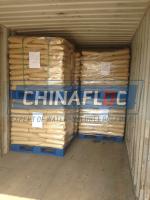
TALOFLOC 100, an anionic flocculant characterized by low hydrolysis degree and high molecular weight, is designed for applications where strong bridging flocculation, fast settling, and stability in complex water conditions are required. Its relatively low anionic charge and very long polymer chains make it especially suitable for treating suspensions composed of inorganic particles with weak surface charge. Below is a detailed overview of its major applications across industries.
1. Mineral Processing and Ore Beneficiation
One of the most important application areas of TALOFLOC 100 is in mineral processing, including iron ore, coal, bauxite, phosphate, and other non-metallic minerals. In these systems, fine particles are often difficult to separate due to their small size and low electrostatic interaction.
Because TALOFLOC 100 has a low hydrolysis degree, it avoids excessive electrostatic repulsion that could occur with highly anionic polymers. Instead, it works mainly through polymer bridging, where long molecular chains adsorb onto multiple particles and link them together into large, dense flocs.
The high molecular weight is critical here, as it increases the effective chain length, enabling the formation of stronger and larger aggregates. This leads to:
-
Faster sedimentation rates in thickeners
-
Improved overflow clarity
-
Higher underflow concentration
-
Increased plant throughput
It is particularly effective in tailings thickening, where efficient water recovery and compact sludge formation are essential.
2. Sand Washing and Aggregates Industry
In sand washing plants and construction material processing, wastewater typically contains high levels of fine clay and silt particles. These particles are usually negatively charged but with relatively low charge density.
TALOFLOC 100 performs well in this environment because:
-
Its low charge density prevents overcharging, which could destabilize flocs
-
Its long chains promote strong bridging, forming large, fast-settling flocs
As a result, it is widely used for:
-
Clarification of wash water
-
Recycling of process water
-
Reduction of turbidity in discharge water
This improves water reuse efficiency and reduces environmental discharge, which is increasingly important under strict regulatory conditions.
3. Industrial Wastewater Treatment
TALOFLOC 100 is also applied in industrial wastewater treatment, especially in sectors such as:
-
Ceramics and glass manufacturing
-
Metallurgical processing
-
Stone cutting and polishing
-
Chemical plants producing inorganic residues
In these systems, suspended solids are mainly inorganic and often have low or variable surface charge. A highly hydrolyzed anionic flocculant may not perform well due to repulsion effects. TALOFLOC 100, with its lower hydrolysis degree, provides better adsorption onto particle surfaces and forms more stable flocs.
Typical benefits include:
-
Improved solid-liquid separation
-
Reduced sludge volume
-
Enhanced clarity of treated water
-
Lower chemical consumption when used with coagulants
It is often used as a flocculation aid following coagulation with inorganic salts such as alum or polyaluminum chloride.
4. Oil and Gas Industry
In the oil and gas sector, TALOFLOC 100 is used in both upstream and downstream applications.
In drilling operations, it acts as:
-
A viscosity modifier, improving drilling fluid performance
-
A suspension agent, helping to carry drill cuttings to the surface
In enhanced oil recovery (EOR), its high molecular weight contributes to increased solution viscosity, which improves the mobility ratio and enhances oil displacement efficiency.
Its low hydrolysis degree provides better tolerance to:
-
High salinity
-
Divalent ions (Ca²⁺, Mg²⁺)
-
Harsh reservoir conditions
This makes it more stable than highly hydrolyzed polymers, which may precipitate or degrade in such environments.
5. Tailings Management and Sludge Dewatering
Mining and industrial operations generate large volumes of tailings and sludge that must be treated and disposed of efficiently. TALOFLOC 100 is widely used in:
-
Tailings thickening
-
Sludge settling
-
Mechanical dewatering processes
Its strong bridging ability produces compact and dense flocs, which:
-
Settle rapidly
-
Release water more easily
-
Improve filtration and centrifugation efficiency
This leads to:
-
Higher solids concentration in underflow
-
Reduced storage volume
-
Improved water recovery for reuse
These advantages are critical for reducing environmental impact and operating costs.
6. Soil Stabilization and Erosion Control
TALOFLOC 100 is also applied in soil treatment and environmental protection. When applied to soil, it binds fine particles together, forming stable aggregates.
Key benefits include:
-
Reduced soil erosion caused by water or wind
-
Improved water infiltration
-
Enhanced soil structure stability
Because of its low charge density, it interacts gently with soil minerals, making it suitable for agricultural and ecological applications without causing excessive dispersion or chemical imbalance.
7. Papermaking Industry
In the papermaking process, TALOFLOC 100 can be used as a retention and drainage aid, particularly in systems where anionic conditions dominate.
Its functions include:
-
Retaining fine fibers and fillers within the paper sheet
-
Improving drainage rate on the wire section
-
Enhancing sheet formation
The high molecular weight provides strong bridging between fibers, while the low hydrolysis degree ensures compatibility with other additives, especially in complex wet-end chemistry systems.
Conclusion
TALOFLOC 100, with its low hydrolysis degree and high molecular weight, is a highly versatile anionic flocculant optimized for systems where bridging dominates over charge neutralization. It is especially effective in treating inorganic suspensions, high-solid-content slurries, and environments with variable water chemistry.
Its main advantages include:
-
Formation of large, strong, and fast-settling flocs
-
High efficiency in low-charge particle systems
-
Good tolerance to salinity and multivalent ions
-
Improved water recovery and reduced sludge volume
As a result, it is widely used in mineral processing, wastewater treatment, oil and gas operations, tailings management, construction industries, soil stabilization, and papermaking, making it an essential solution for modern solid-liquid separation challenges.
https://youtube.com/shorts/xsOG6iUnbzo



491_small.jpg "Chinafloc Anionic Flocculant|anionic flocculant from chinafloc")