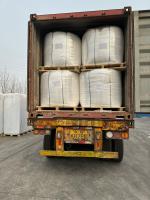
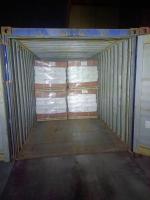
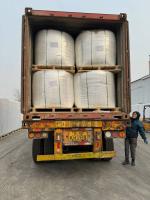
Hydroxamic acid polyacrylamide (HAPAM) is a high-performance, chemically modified flocculant widely used in tailings thickening in mining operations. By introducing hydroxamic acid functional groups (–CONHOH) into the polyacrylamide backbone, this polymer gains strong metal-ion binding capability, enhanced adsorption characteristics, and superior flocculation performance. These properties make hydroxamic acid polyacrylamide particularly effective in handling fine particles, complex mineral slurries, and high-density tailings systems.
Below is a detailed and structured explanation (≈900 words) of the application of hydroxamic acid polyacrylamide in tailings thickening.
1. Background: Tailings Thickening in Mining
Tailings are the residual slurry left after valuable minerals have been extracted from ore. They typically contain:
-
Fine and ultra-fine particles (<20 μm)
-
Residual reagents
-
Metal ions (Fe³⁺, Al³⁺, Cu²⁺, etc.)
-
High water content
Efficient tailings thickening is essential for:
-
Water recovery and reuse
-
Reducing tailings storage volume
-
Improving environmental performance
-
Enabling dry stacking or paste thickening
However, challenges include:
-
Slow settling rates
-
Poor solid-liquid separation
-
High turbidity in overflow water
-
Difficulty in dewatering fine particles
Hydroxamic acid polyacrylamide is designed to address these issues.
2. Chemical Structure and Functional Advantages
2.1 Hydroxamic Acid Groups
The defining feature of HAPAM is the presence of hydroxamic acid groups:
-
Strong chelation with metal ions (Fe³⁺, Al³⁺, Cu²⁺)
-
Enhanced adsorption onto mineral surfaces
2.2 High Molecular Weight Polymer Chain
-
Provides long-chain bridging capability
-
Promotes aggregation of fine particles
2.3 Dual Mechanism
HAPAM works through:
(1) Chelation and Anchoring
-
Hydroxamic groups bind to metal sites on particles
(2) Bridging Flocculation
-
Polymer chains connect multiple particles

651_small.jpg "hydroxamaic acid polyacrylamide for tailings thickening in mining")