Our Products
Polyacrylamide / anionic polyacrylamide PRAESTOL LT27 AG can be replaced By Chinafloc A2527
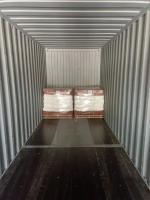



Anionic polyacrylamide PRAESTOL LT27 AG is a high-molecular-weight, water-soluble flocculant developed for efficient solid–liquid separation in a wide range of industrial and municipal processes. It is widely applied in municipal and industrial wastewater treatment, mining and mineral processing, tailings thickening, coal preparation, sludge clarification, process water recovery, and construction slurry treatment. With its optimized anionic charge density and excellent dissolution characteristics, anionic polyacrylamide PRAESTOL LT27 AG delivers reliable flocculation performance under variable operating conditions.
Anionic polyacrylamide PRAESTOL LT27 AG is supplied as a free-flowing granular polymer with advanced granulation technology. Compared with conventional dry polymers, PRAESTOL LT27 AG offers improved wetting behavior, reduced dust generation, and faster dissolution in polymer make-down systems. The product is designed for large-scale continuous operations where consistent solution quality and operational stability are critical.
The anionic nature of PRAESTOL LT27 AG makes it particularly effective for treating suspensions containing inorganic solids, mineral particles, metal hydroxides, clays, coal fines, and other negatively charged or weakly charged particles, especially in neutral to alkaline environments.
The primary flocculation mechanism of anionic polyacrylamide PRAESTOL LT27 AG is polymer bridging. The long polymer chains adsorb onto particle surfaces at multiple points and extend into the surrounding liquid phase. These extended chains connect multiple particles, forming large, dense aggregates.
Because polymer bridging does not rely solely on charge neutralization, PRAESTOL LT27 AG is highly effective in high-solids systems, alkaline slurries, and suspensions pretreated with inorganic coagulants such as aluminum sulfate, ferric chloride, ferric sulfate, or polyaluminum chloride. The resulting flocs exhibit fast settling rates, good shear resistance, and improved dewatering behavior.
In municipal water and wastewater treatment facilities, anionic polyacrylamide PRAESTOL LT27 AG is primarily used as a secondary flocculant following inorganic coagulants. Typical applications include:
Raw water clarification
Primary sedimentation enhancement
Sludge thickening
Tertiary clarification and polishing
PRAESTOL LT27 AG improves floc size and settling velocity, producing clearer supernatant and more concentrated sludge underflow. In sludge thickening applications, the polymer supports stable thickener operation, increases solids concentration, and reduces the hydraulic load on downstream dewatering equipment.
Anionic polyacrylamide PRAESTOL LT27 AG is widely used in industrial wastewater treatment systems containing high levels of suspended inorganic solids. Typical industries include:
Steel and metal processing
Power generation and cooling water treatment
Cement, ceramics, and building materials
Chemical and petrochemical industries
In these applications, PRAESTOL LT27 AG is often applied after coagulation to strengthen floc structure and accelerate solid–liquid separation. The use of anionic polyacrylamide PRAESTOL LT27 AG results in lower effluent turbidity, improved water reuse rates, and reduced sludge disposal volumes.
Mining and mineral processing are among the most important application areas for anionic polyacrylamide PRAESTOL LT27 AG. The product is commonly used for:
Tailings thickening
Clarification of recycled process water
Solid–liquid separation in beneficiation circuits
Fine mineral particles and clay components often settle slowly and limit thickener capacity. PRAESTOL LT27 AG promotes rapid floc formation and increased settling velocity, allowing higher throughput and more stable thickener operation. Dense underflow and clear overflow achieved with PRAESTOL LT27 AG support efficient water recovery and reduced tailings storage requirements.
In coal preparation plants, anionic polyacrylamide PRAESTOL LT27 AG is used to clarify coal wash water and recover fine coal particles. The polymer effectively aggregates coal fines and mineral impurities into strong flocs, improving settling performance and reducing solids losses. This leads to improved coal recovery efficiency and cleaner recycled process water.
Although anionic polymers are not typically primary dewatering agents for biological sludge, anionic polyacrylamide PRAESTOL LT27 AG plays an important role in sludge thickening and conditioning, particularly for inorganic or mineral-rich sludges. It enhances sludge structure and water release in gravity thickeners and improves the performance of downstream belt presses, centrifuges, and filter presses, especially when used in dual-polymer systems with cationic products.
In construction and civil engineering projects, anionic polyacrylamide PRAESTOL LT27 AG is applied to treat bentonite slurries, drilling fluids, and tunneling slurries. The polymer accelerates solids aggregation and sedimentation, enabling efficient slurry treatment and on-site water reuse. This reduces disposal costs and minimizes environmental impact while maintaining stable construction operations.
Anionic polyacrylamide PRAESTOL LT27 AG is compatible with most inorganic coagulants, pH control agents, and commonly used process chemicals. It can be applied as a standalone flocculant or as part of a dual-chemical treatment program. Optimal performance depends on proper solution preparation, correct dosing location, adequate mixing for dispersion, and sufficient residence time for floc growth.
Typical dosage levels of anionic polyacrylamide PRAESTOL LT27 AG range from 0.5 to 10 g/m³, depending on solids concentration, particle size distribution, and process conditions. The polymer is normally prepared as a 0.05–0.3% aqueous solution. Adequate hydration time and gentle mixing are essential to ensure complete polymer activation and consistent flocculation performance.
In summary, anionic polyacrylamide PRAESTOL LT27 AG is a versatile and high-efficiency flocculant for municipal and industrial wastewater treatment, mining and mineral processing, coal preparation, sludge thickening, and construction slurry management. Through strong polymer-bridging action, anionic polyacrylamide PRAESTOL LT27 AG delivers faster settling, clearer overflow, higher underflow solids concentration, and improved water recovery. Its reliable performance, compatibility with coagulants, and suitability for large-scale operations make anionic polyacrylamide PRAESTOL LT27 AG a proven solution for modern solid–liquid separation challenges.
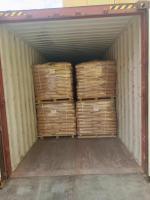
342_small.jpg "Chinafloc Anionic Polyacrylamide--A2818")
