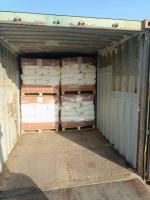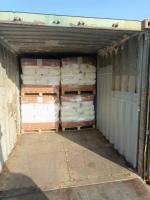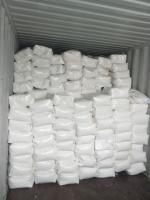


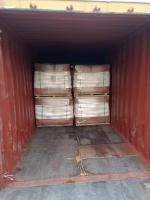
Nonionic polyacrylamide DIAFLOC NP500 is a high–molecular-weight polymer flocculant widely used in water treatment, mineral processing, and industrial solid–liquid separation processes. As a nonionic polymer, nonionic polyacrylamide DIAFLOC NP500 contains little to no electrical charge, making it particularly effective in systems where suspended particles are neutral or where ionic polymers (anionic or cationic) are less efficient. The primary mechanism of nonionic polyacrylamide DIAFLOC NP500 is adsorption and bridging, where long polymer chains connect fine particles into larger aggregates that can settle or be filtered easily.
One of the most important applications of nonionic polyacrylamide DIAFLOC NP500 is in mining and mineral processing industries. During ore beneficiation, large volumes of slurry containing fine mineral particles are produced. These particles are extremely small and can remain suspended in water for long periods, making natural sedimentation very slow. When nonionic polyacrylamide DIAFLOC NP500 is added, the polymer adsorbs onto particle surfaces and forms bridges between particles, resulting in the formation of large and dense flocs. These flocs settle quickly in thickeners and clarifiers, improving solid–liquid separation and allowing water to be recycled back into the process.
Another key application of nonionic polyacrylamide DIAFLOC NP500 is in industrial wastewater treatment, especially in systems where wastewater has low ionic strength or contains neutral suspended solids. Industries such as ceramics, glass manufacturing, and food processing generate wastewater with fine particles that are not strongly charged. In such cases, nonionic polyacrylamide DIAFLOC NP500 performs better than ionic flocculants because it relies on physical adsorption and bridging rather than charge neutralization. The polymer effectively aggregates suspended solids, improving sedimentation rates and producing clearer effluent.
In the paper and pulp industry, nonionic polyacrylamide DIAFLOC NP500 is used for both process optimization and wastewater treatment. Papermaking processes generate large volumes of water containing cellulose fibers, fillers, and fine particles. Nonionic polyacrylamide DIAFLOC NP500 promotes the aggregation of these particles, improving fiber retention and enhancing drainage. In wastewater treatment systems, it helps remove suspended solids and reduces the load on downstream treatment units. This contributes to improved water reuse and lower environmental impact.
The textile industry also utilizes nonionic polyacrylamide DIAFLOC NP500 in wastewater treatment processes. Textile effluents often contain fibers, dyes, and organic matter. While cationic polymers are typically used for dye removal, nonionic polyacrylamide DIAFLOC NP500 plays an important role in removing neutral particles and enhancing overall floc formation. When used together with coagulants or other polymers, it improves the efficiency of sedimentation tanks and dissolved air flotation systems.
Another important application of nonionic polyacrylamide DIAFLOC NP500 is in sludge thickening and dewatering. In some industrial sludge systems, the particles have low surface charge and are difficult to treat with cationic or anionic polymers alone. Nonionic polyacrylamide DIAFLOC NP500 enhances particle aggregation and improves water release during mechanical dewatering processes such as centrifuges, belt filter presses, and filter presses. This leads to higher solids capture efficiency and drier sludge cakes, reducing disposal costs.
In the ceramics and kaolin industries, nonionic polyacrylamide DIAFLOC NP500 is widely used for clay and fine particle settling. These materials often form stable suspensions due to their fine particle size and low charge characteristics. The nonionic nature of nonionic polyacrylamide DIAFLOC NP500 allows it to effectively adsorb onto particle surfaces and create strong bridging effects, leading to rapid sedimentation and improved clarification. This enhances production efficiency and allows for better water recovery.
Nonionic polyacrylamide DIAFLOC NP500 is also applied in the food processing industry for wastewater treatment. Wastewater generated from food processing often contains organic solids and neutral particles. The polymer helps aggregate these particles into larger flocs, improving clarification and filtration efficiency. Because nonionic polyacrylamide generally has good compatibility and low toxicity, it is suitable for use in food-related applications under controlled conditions.
In municipal wastewater treatment, nonionic polyacrylamide DIAFLOC NP500 can be used in specific cases where the sludge has low charge characteristics or where a combination of polymers is required to achieve optimal floc structure. Although cationic polymers are more commonly used for sludge dewatering, nonionic polyacrylamide DIAFLOC NP500 can enhance floc strength and improve settling performance when used as a co-flocculant.
Another important application of nonionic polyacrylamide DIAFLOC NP500 is in surface water and groundwater clarification. In water treatment plants, it is used to remove suspended solids and improve water clarity, especially in low turbidity or low ionic strength waters. The polymer enhances floc formation and accelerates sedimentation, leading to better filtration performance.
In addition, nonionic polyacrylamide DIAFLOC NP500 is used in environmental protection applications, such as sediment control and soil stabilization. During construction, dredging, or land development activities, large amounts of fine soil particles can enter nearby water bodies. The polymer helps flocculate these particles, reducing turbidity and preventing sediment pollution.
In conclusion, nonionic polyacrylamide DIAFLOC NP500 is a versatile and efficient flocculant suitable for a wide range of applications. Its nonionic nature makes it especially effective in systems with low charge density and neutral conditions. Through its strong adsorption and bridging mechanism, nonionic polyacrylamide DIAFLOC NP500 improves solid–liquid separation, enhances sedimentation, and increases process efficiency. It is widely used in mining, industrial wastewater treatment, paper and pulp processing, textile industry, sludge dewatering, ceramics processing, food industry wastewater treatment, municipal water treatment, and environmental protection projects, making it an important solution in modern water treatment and resource recovery technologies.