

Our Products

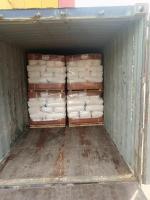
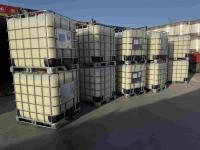
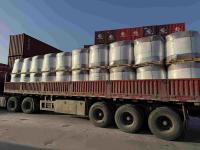
Polyacrylamide / the equivalent of superfloc xd-7400 cationic polyacrylamide can be replaced by Chinafloc C
Superfloc XD-7400 is a cationic polyacrylamide (CPAM) flocculant used primarily for sludge conditioning and mechanical sludge dewatering in municipal and industrial wastewater treatment plants. As a cationic polymer, it contains positively charged functional groups that interact with negatively charged suspended particles, organic matter, and biological sludge.
The main function of Superfloc XD-7400 is to improve floc formation, accelerate solid-liquid separation, increase sludge cake dryness, and reduce the moisture content of sludge. It can be evaluated in different mechanical dewatering systems, including decanter centrifuges, belt filter presses, and filter presses.
Its high molecular weight and cationic properties make it useful for applications requiring effective sludge flocculation and water separation.
1. Municipal Wastewater Sludge Dewatering
One of the most important applications of Superfloc XD-7400 cationic polyacrylamide is municipal wastewater sludge dewatering.
Municipal sewage treatment plants generate large quantities of primary sludge, secondary biological sludge, and digested sludge. These sludges contain microorganisms, organic substances, suspended solids, and fine colloidal particles.
Many sludge particles have negatively charged surfaces, which prevent them from naturally aggregating into larger particles.
Superfloc XD-7400 works through two primary mechanisms:
-
Charge neutralization: Its cationic groups reduce the negative electrical charges on sludge particles, allowing them to approach each other.
-
Polymer bridging: Its long molecular chains connect multiple particles, forming larger and stronger flocs.
These processes improve sludge dewatering performance by:
-
Increasing sludge floc size.
-
Improving solids capture efficiency.
-
Reducing suspended solids in separated water.
-
Improving sludge cake formation.
-
Increasing mechanical dewatering efficiency.
-
Potentially reducing sludge disposal and transportation costs.
2. Centrifuge Sludge Dewatering
Superfloc XD-7400 is particularly relevant to sludge dewatering using decanter centrifuges.
A decanter centrifuge separates sludge solids from water through centrifugal force. However, fine particles are difficult to separate efficiently because they can remain suspended in the liquid phase.
Adding cationic polyacrylamide before centrifugation helps combine fine particles into larger flocs. These flocs respond more effectively to centrifugal separation.
The major benefits include:
-
Improved sludge flocculation before centrifugation.
-
Higher suspended solids capture.
-
Better centrate clarity.
-
Improved sludge cake dryness.
-
More stable centrifuge operation.
-
Potentially lower polymer consumption.
The optimum performance depends on polymer dosage, sludge concentration, mixing intensity, and centrifuge operating conditions.
3. Belt Filter Press Dewatering
Another important application of Superfloc XD-7400 is belt filter press sludge dewatering.
Belt filter presses are widely used in municipal sewage treatment plants and industrial wastewater treatment facilities. They remove water through gravity drainage and mechanical compression.
The effectiveness of this process depends heavily on sludge floc structure.
Superfloc XD-7400 helps form larger and stronger flocs that can withstand mechanical pressure during dewatering.
Its potential advantages include:
-
Improved initial gravity drainage.
-
Faster water release.
-
Better sludge retention on filter belts.
-
Reduced solids loss through the drainage system.
-
Improved sludge cake formation.
-
Increased equipment processing capacity.
Proper polymer preparation and dosage control are important for achieving consistent performance.
4. Filter Press Sludge Conditioning
Superfloc XD-7400 can also be evaluated as a sludge conditioner before filter press operations.
Filter presses separate water from sludge by applying pressure through filter cloths. Fine particles can block filter pores and reduce filtration efficiency.
Cationic polyacrylamide promotes particle aggregation, creating larger flocs that can improve filtration characteristics.
Typical applications include:
-
Municipal sewage sludge.
-
Chemical industry wastewater sludge.
-
Paper mill sludge.
-
Food processing wastewater sludge.
-
Pharmaceutical wastewater sludge.
The appropriate dosage should be established through laboratory filtration tests and industrial trials.
5. Industrial Wastewater Treatment
Besides municipal sewage treatment, Superfloc XD-7400 can be evaluated in different industrial wastewater treatment applications.
Paper and pulp industry: Paper mills produce wastewater containing cellulose fibers, organic matter, and suspended solids. Cationic polyacrylamide helps aggregate fine particles and condition wastewater sludge before mechanical dewatering.
Food processing industry: Wastewater from meat processing, dairy production, beverage manufacturing, and other food industries contains organic solids, proteins, and biological sludge. CPAM can improve sludge flocculation and water separation.
Textile industry: Textile wastewater contains dyes, fibers, sizing agents, and organic pollutants. Cationic polyacrylamide can be used for conditioning the resulting sludge before centrifuge or filter press dewatering.
Chemical industry: Chemical manufacturing wastewater may contain fine suspended solids, organic materials, and inorganic precipitates. Superfloc XD-7400 can be tested to improve sludge aggregation and mechanical separation.
Petrochemical industry: Oilfield and petrochemical wastewater treatment generates oily sludge and biological sludge. Cationic polymers may help condition suitable sludge streams for dewatering, although oily sludge requires specific compatibility testing.
6. Digested Sludge Dewatering
Anaerobic digestion is widely used in municipal wastewater treatment plants to reduce organic matter and stabilize sewage sludge.
However, digested sludge often has poor dewatering characteristics because of its fine particles, dissolved organic substances, and complex biological composition.
Superfloc XD-7400 can help improve digested sludge conditioning through charge neutralization and polymer bridging.
Potential benefits include improved floc strength, better solids capture, enhanced water release, and improved mechanical dewatering efficiency.
This makes cationic polyacrylamide an important chemical option for wastewater treatment plants processing anaerobically digested sludge.
7. Recommended Dosage and Application Method
The dosage of Superfloc XD-7400 depends on sludge characteristics, solid concentration, equipment type, and required dewatering performance.
There is no universal dosage suitable for every wastewater treatment plant.
For practical application, the following procedure is recommended:
-
Prepare the polymer solution according to the supplier's instructions.
-
Allow sufficient time for polymer dissolution and activation.
-
Introduce the diluted polymer into the sludge pipeline or conditioning tank.
-
Provide adequate mixing to distribute the polymer uniformly.
-
Avoid excessive mechanical shear that may destroy formed flocs.
-
Evaluate cake dryness, filtrate or centrate clarity, and solids capture.
Jar tests and pilot-scale dewatering trials should be conducted before determining the final dosage.
8. Why Choose Superfloc XD-7400 Cationic Polyacrylamide?
Superfloc XD-7400 is a candidate for wastewater treatment facilities requiring effective cationic polymer conditioning.
Its main functional advantages are:
-
Strong interaction with negatively charged sludge particles.
-
Improved floc formation and particle aggregation.
-
Better solid-liquid separation.
-
Potential improvement in sludge cake dryness.
-
Compatibility evaluation across different mechanical dewatering systems.
-
Potential reduction in sludge handling and disposal costs.
The actual economic benefits depend on the sludge properties, polymer price, dosage, and dewatering equipment.
Conclusion
The main application of Superfloc XD-7400 cationic polyacrylamide is municipal and industrial sludge dewatering. It is particularly relevant to decanter centrifuges, belt filter presses, and filter press systems.
Its principal functions are charge neutralization, polymer bridging, sludge flocculation, suspended solids capture, and water separation.
For wastewater treatment plants seeking improved sludge dewatering efficiency, higher cake solids content, and reduced sludge disposal costs, Superfloc XD-7400 is a polymer grade worth evaluating through laboratory and industrial performance tests.