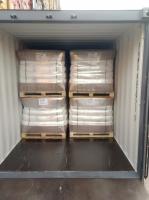
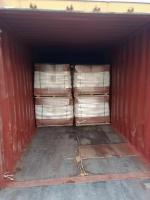
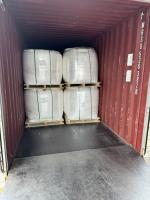
MAGNAFLOC-338 is a high-performance anionic polyacrylamide (APAM) flocculant widely used in solid–liquid separation processes across industries such as mineral processing, wastewater treatment, coal washing, metallurgy, and chemical manufacturing. It is a high-molecular-weight polymer with a relatively strong anionic charge density, providing excellent bridging and aggregation performance for fine suspended solids. Its outstanding flocculation efficiency, fast settling speed, and low dosage requirement make it a preferred product for large-scale industrial operations.
1. Application in Mineral Processing and Mining Industry
The primary and largest application of MAGNAFLOC-338 is mineral processing, especially in the thickening and dewatering of mineral slurries. It is extensively used in:
-
Copper, gold, iron ore, lead–zinc, and bauxite mining
-
Phosphate, potash, and rare earth beneficiation
-
Tailings treatment and tailings dam water recovery
In mineral beneficiation, grinding and flotation generate large amounts of ultra-fine particles that remain suspended in process water. MAGNAFLOC-338 acts as a high-efficiency flocculant by adsorbing onto the surfaces of negatively charged mineral particles and forming large, dense flocs through polymer bridging. These flocs settle rapidly in thickeners, clarifiers, and paste thickeners.
Key benefits in mining include:
-
Faster settling velocity
-
Higher overflow clarity
-
Increased underflow solids concentration
-
Reduced water consumption through improved recycling
-
Improved performance of vacuum filters, belt filters, and filter presses
In modern mine backfill operations, MAGNAFLOC-338 also plays an important role in tailings dewatering for paste backfill, helping achieve higher solids content and reducing cement consumption.
2. Application in Wastewater Treatment
MAGNAFLOC-338 is widely used in industrial wastewater treatment and municipal sludge treatment, especially where large volumes of inorganic suspended solids must be removed.
(1) Industrial Wastewater Treatment
It is commonly applied in:
-
Steel and metallurgical wastewater
-
Coal preparation plant effluent
-
Chemical manufacturing wastewater
-
Ceramic and glass industry wastewater
-
Sand washing and stone processing wastewater
In these systems, MAGNAFLOC-338 acts as a primary or coagulant-aid flocculant, often used after inorganic coagulants such as PAC or alum. It enhances floc size, promotes fast sedimentation, and significantly improves water clarity. The treated water can often be reused in circulation systems, reducing fresh water consumption and discharge costs.
(2) Sludge Thickening and Dewatering
MAGNAFLOC-338 is also effective in:
-
Gravity sludge thickening
-
Belt filter press dewatering
-
Plate and frame filter press dewatering
-
Centrifugal sludge dewatering
It helps form strong, shear-resistant flocs, improving cake dryness and reducing filtrate turbidity. Compared with low-molecular-weight flocculants, it improves dewatering efficiency while minimizing polymer consumption.
3. Application in Coal Washing and Preparation Plants
In coal washing plants, large volumes of coal slime water containing ultra-fine particles are generated. These fine particles are difficult to settle naturally and easily cause:
-
Circulating water turbidity
-
Overflow loss of fine coal
-
Increased load on sedimentation tanks
MAGNAFLOC-338 is used to flocculate fine coal particles in:
Its application leads to:
-
Improved fine coal recovery
-
Reduced water turbidity
-
Faster thickener settling
-
Better water recycling efficiency
This contributes directly to lower operating costs and higher clean coal yield.
4. Application in Metallurgical Industry
In metallurgy, MAGNAFLOC-338 is applied in wastewater and process water treatment from:
These wastewaters contain large amounts of iron oxide scale, metallic fines, and suspended solids. MAGNAFLOC-338 aggregates these particles effectively, allowing them to be separated through sedimentation or filtration. This not only ensures compliance with environmental discharge standards but also enables the recovery of valuable metal fines.
5. Application in Chemical and Process Industries
In many chemical industries, MAGNAFLOC-338 functions as a solid separation aid in processes such as:
-
Calcium carbonate production
-
Titanium dioxide manufacturing
-
Phosphoric acid production
-
Alumina and silica separation
It assists in separating reaction solids from process liquor, improving filtration rate, product purity, and production efficiency. Because of its strong floc strength, it performs well even under high temperature, high salinity, and variable pH conditions.
6. Application in Power Plants and Ash Handling Systems
In thermal power plants, MAGNAFLOC-338 is widely used in:
-
Fly ash slurry clarification
-
Bottom ash wastewater treatment
-
Lime-gypsum desulfurization wastewater
It promotes rapid solid–liquid separation, enabling reuse of clarified water in cooling or ash sluicing systems. The polymer helps reduce sedimentation tank dimensions, improves overflow water quality, and minimizes sludge volume.
7. Application in Papermaking Process Water Treatment
Although cationic polymers dominate papermaking systems, MAGNAFLOC-338 is still used in:
It helps recover fine cellulose fibers and fillers such as calcium carbonate and kaolin, reducing raw material losses and improving overall water reuse efficiency.
8. Technical Advantages of MAGNAFLOC-338
MAGNAFLOC-338 offers several practical advantages:
-
High molecular weight for excellent bridging flocculation
-
Strong adaptability to different mineral slurries
-
High floc strength and rapid sedimentation
-
Low dosage and cost-effective operation
-
Easy dissolution and good storage stability
-
Effective over a wide pH range
Conclusion