

Our Products

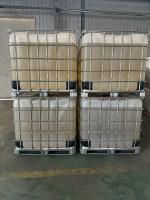
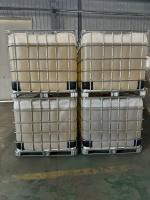
coagulant / polydadmac(20-40% solid content)can be used for water treatment and mining
1. Introduction
PolyDADMAC, also known as poly(diallyldimethylammonium chloride), is a cationic water-soluble polymer widely used in water treatment, wastewater treatment, and mineral processing. It has a strong positive charge, which enables it to neutralize negatively charged suspended particles, colloids, and certain dissolved organic substances.
PolyDADMAC with 20–40% solid content is commonly supplied as a liquid polymer solution. Depending on its molecular weight, charge characteristics, viscosity, and formulation, it can be used as a primary coagulant, a colloidal destabilizer, and an aid in solid-liquid separation.
In water treatment, PolyDADMAC helps remove turbidity, color, and suspended matter. In the mining industry, it can assist with process-water clarification, tailings-water treatment, and wastewater recycling. However, its performance depends on the specific water chemistry and mineral particles involved.
2. PolyDADMAC for Drinking Water Treatment
One important application of PolyDADMAC is drinking water clarification. Raw water from rivers, lakes, and reservoirs often contains clay, silt, fine suspended particles, and natural organic matter.
Many of these particles carry negative surface charges and remain dispersed in water. PolyDADMAC neutralizes these charges, reducing electrostatic repulsion and allowing small particles to aggregate into larger flocs.
The resulting flocs can be removed through sedimentation, dissolved air flotation, or filtration.
Potential benefits include:
-
Improved turbidity removal.
-
More effective coagulation of fine colloidal particles.
-
Assistance with natural organic matter removal.
-
Reduced dependence on some conventional inorganic coagulants in suitable applications.
-
Improved performance of downstream filtration when correctly dosed.
PolyDADMAC may be used alone or in combination with aluminum sulfate, ferric chloride, polyaluminum chloride (PAC), or other treatment chemicals.
For drinking water applications, the selected grade must comply with the relevant local regulations and applicable certification requirements. The permitted dosage and residual limits should be verified before use.
3. PolyDADMAC for Industrial Wastewater Treatment
Industrial wastewater can contain suspended solids, colloidal particles, organic contaminants, and color-producing substances. PolyDADMAC is particularly useful when negatively charged particles need to be destabilized before separation.
Potential applications include:
-
Textile dyeing and printing wastewater.
-
Paper and pulp mill wastewater.
-
Food processing wastewater.
-
Chemical manufacturing wastewater.
-
Pharmaceutical industry wastewater.
-
General industrial wastewater clarification.
-
Certain oily wastewater streams.
In textile wastewater treatment, PolyDADMAC can help destabilize dye particles and colloidal impurities. In paper mills, it may improve the removal of suspended fibers and fine particles from wastewater. In food processing, it can assist in separating suspended organic matter.
However, PolyDADMAC does not remove every dissolved pollutant. Highly soluble organic compounds, salts, and certain dissolved chemicals may require additional treatment technologies.
4. PolyDADMAC for Mining Process Water
The mining industry uses large volumes of water for mineral processing, ore washing, flotation, grinding, and tailings management. Recycling process water is important for reducing freshwater consumption and improving operational efficiency.
PolyDADMAC can be used as a coagulant in mining-water clarification. Fine clay, silica, and other suspended mineral particles frequently remain dispersed in process water because of their small size and surface charge.
Adding an appropriate amount of PolyDADMAC can neutralize particle charges and promote aggregation. The resulting particles may settle more rapidly or become easier to remove using clarification and filtration equipment.
Potential mining applications include:
-
Mineral-processing wastewater clarification.
-
Ore-washing water treatment.
-
Tailings-water clarification and recycling.
-
Removal of fine suspended mineral particles.
-
Process-water recycling in beneficiation plants.
-
Treatment of certain mine-site wastewater streams.
The effectiveness of PolyDADMAC depends on the mineral composition, particle-size distribution, water pH, salinity, and concentration of dissolved ions.
5. PolyDADMAC in Tailings and Thickener Systems
Mining operations generate tailings containing fine mineral particles and water. Clarifying the water can help recover reusable process water and reduce the solids load entering downstream treatment systems.
PolyDADMAC can serve as a primary coagulant to destabilize fine particles before a suitable flocculant is added.
For example, a treatment system may use PolyDADMAC to neutralize particle charges, followed by an anionic polyacrylamide flocculant to bridge the destabilized particles into larger aggregates. This combined approach may improve settling and water clarity when the two products are chemically compatible.
Nevertheless, PolyDADMAC is not automatically the best choice for every tailings thickener. High-molecular-weight anionic or other specialized flocculants may be more important for generating large, fast-settling flocs and achieving high underflow solids concentrations.
Jar tests and settling-column tests should establish whether PolyDADMAC alone or a combined coagulant-flocculant system provides the best result.
6. PolyDADMAC for Coal Washing and Mineral Beneficiation
Coal washing and mineral beneficiation produce wastewater containing fine coal particles, clay, and mineral impurities. These particles can make recycled water difficult to clarify.
PolyDADMAC may help destabilize negatively charged fines and improve their separation from water. In suitable systems, it can be used before sedimentation, filtration, or a secondary flocculation stage.
Potential benefits include better process-water clarity, improved recovery of suspended solids, and reduced loading on downstream treatment equipment.
However, coal and mineral processing systems frequently contain flotation reagents, dispersants, and other chemicals that can interfere with coagulation. Testing must therefore be conducted using actual process water.
PolyDADMAC should also be evaluated carefully in flotation circuits because excessive cationic coagulant can affect mineral surface chemistry and interfere with flotation selectivity.
7. How Does Solid Content Affect PolyDADMAC Selection?
Commercial PolyDADMAC liquid products commonly have solid contents within the 20–40% range, although the available concentrations depend on the manufacturer and grade.
| Property | Practical significance |
|---|---|
| 20% solid content | Lower active-solids concentration; may be easier to pump in some formulations. |
| 30% solid content | Intermediate concentration that may balance active content and handling requirements. |
| 40% solid content | Higher active-solids concentration, potentially reducing the volume required for equivalent active-polymer dosage. |
These comparisons are general rather than guaranteed product specifications. Actual viscosity, pumpability, and handling characteristics depend on molecular weight, formulation, temperature, and other product properties.
Solid content alone does not determine coagulation efficiency. A 40% product is not necessarily more effective than a 20% product when both are dosed at the same active-polymer concentration.
When comparing products, calculate dosage on an active-solids basis and consider shipping costs, storage requirements, dilution needs, and chemical consumption.
8. Recommended Dosage and Testing
The optimum PolyDADMAC dosage varies according to the water source, suspended-solids concentration, organic content, and treatment objective. Therefore, a universal dosage cannot be recommended for all water-treatment and mining applications.
A practical evaluation procedure is:
-
Collect representative raw water or process water.
-
Prepare the PolyDADMAC solution according to the supplier's instructions.
-
Conduct jar tests using several dosages.
-
Compare turbidity, settling rate, floc formation, and residual suspended solids.
-
Evaluate compatibility with PAC, ferric salts, or polyacrylamide flocculants where applicable.
-
Confirm the optimum conditions through pilot or plant testing.
The final selection should balance water clarity, treatment efficiency, chemical consumption, sludge characteristics, and total operating cost.
9. Conclusion
PolyDADMAC with 20–40% solid content can be used in both water treatment and mining applications. Its principal role is to act as a cationic coagulant that neutralizes negatively charged particles and promotes solid-liquid separation.
In water treatment, it is used for drinking-water clarification where approved, industrial wastewater treatment, turbidity reduction, and color-removal processes. In mining, it can support process-water clarification, tailings-water recycling, ore-washing wastewater treatment, and the removal of fine mineral particles.
For mining operations that require rapid settling and high solids recovery, PolyDADMAC may be combined with an appropriate polyacrylamide flocculant. The best formulation should be selected according to water chemistry, mineral characteristics, solid content, molecular weight, and jar-test results rather than solid content alone.

438_small.jpg "cationic polydadmac polymer for turbidity removal")