

Our Products

coagulant / polyDADMAC for pulp and paper industry wastewater recycling
283_small.jpg "polyDADMAC for pulp and paper industry wastewater recycling")
PolyDADMAC (polydiallyldimethylammonium chloride) is a high-performance cationic polymer widely applied in the pulp and paper industry for wastewater recycling, white water clarification, and process water reuse systems. Its primary function is to destabilize negatively charged colloidal substances and fine suspended solids commonly present in paper mill effluents, thereby improving solid–liquid separation efficiency and enabling closed-loop water management. In modern pulp and paper operations, where water consumption, fiber loss, and environmental discharge regulations are increasingly strict, PolyDADMAC plays a central role in improving process sustainability and operational efficiency.
Pulp and paper wastewater is characterized by high concentrations of fibers, fines, fillers (such as calcium carbonate and clay), dissolved organic matter, lignin derivatives, resin acids, starches, and various additives used in papermaking. These components are often present in colloidal or finely dispersed forms and carry a strong negative surface charge. This charge stability prevents natural aggregation and sedimentation, making chemical coagulation essential for effective wastewater recycling and white water recovery.
PolyDADMAC is a linear cationic polymer containing quaternary ammonium functional groups that provide permanent positive charge density. This structural feature allows it to interact strongly with negatively charged particles regardless of pH conditions, which typically range from neutral to slightly alkaline in paper mill systems. Unlike inorganic coagulants that depend on hydrolysis and are sensitive to alkalinity and temperature, PolyDADMAC maintains stable performance across variable operating conditions commonly found in pulp and paper production.
The primary mechanism of PolyDADMAC in pulp and paper wastewater recycling is charge neutralization. When introduced into white water or process effluent, the polymer rapidly adsorbs onto negatively charged fibers, fillers, and colloidal substances. This adsorption neutralizes surface charge and compresses the electrical double layer surrounding particles. As a result, electrostatic repulsion is eliminated, and particles begin to aggregate into microflocs under the influence of van der Waals forces.
These microflocs consist of fibers, fines, and dissolved organic matter bound together by polymer chains. Once destabilized, they can be further enhanced by secondary flocculants such as polyacrylamide, which promote bridging and formation of larger, more shear-resistant flocs. This two-stage coagulation–flocculation process significantly improves clarification efficiency and water reuse potential.
In pulp and paper mills, PolyDADMAC is widely used in white water treatment systems. White water contains a high concentration of fine fibers, fillers, and organic contaminants generated during paper sheet formation and dewatering. Without treatment, these materials lead to high turbidity, poor water quality, and significant fiber loss. PolyDADMAC effectively aggregates these fine particles, enabling their recovery and reuse in the papermaking process.
One of the key benefits of PolyDADMAC in white water recycling is fiber retention. Fine fibers that would otherwise be lost in effluent streams are captured and returned to the process. This improves raw material efficiency and reduces production costs. In addition, filler retention is significantly enhanced, improving paper quality and reducing chemical consumption.
PolyDADMAC also plays an important role in controlling anionic trash in papermaking systems. Anionic trash refers to dissolved and colloidal substances such as lignin fragments, hemicellulose derivatives, fatty acids, and synthetic additives. These substances interfere with wet-end chemistry, reducing retention efficiency and destabilizing the papermaking process. By neutralizing these negatively charged species, PolyDADMAC stabilizes the system and improves overall process control.
In wastewater recycling loops, PolyDADMAC contributes to reducing turbidity and improving clarity of process water. Cleaner process water reduces scaling, fouling, and deposition issues in equipment such as headboxes, forming sections, and filtration systems. This leads to improved machine efficiency, reduced downtime, and enhanced product quality.
Another important application is in dissolved air flotation (DAF) systems used in paper mill effluent treatment. PolyDADMAC enhances particle–bubble attachment by neutralizing surface charges, allowing fine particles and fibers to attach more effectively to air bubbles. This improves flotation efficiency and reduces suspended solids in treated effluent, making water suitable for reuse or discharge.
In sedimentation-based clarification systems, PolyDADMAC improves settling velocity by promoting aggregation of fine particles into larger flocs. This results in clearer supernatant and more compact sludge formation. The improved sludge characteristics also facilitate easier dewatering and reduce disposal costs.
One of the major advantages of PolyDADMAC in pulp and paper wastewater recycling is its low dosage requirement. Depending on system conditions, typical dosages range from 0.5 to 10 mg/L in white water systems and higher in effluent treatment applications. Its high charge efficiency ensures effective performance even at low concentrations, minimizing chemical costs and reducing residual polymer content in recycled water.
PolyDADMAC is also effective across a wide pH range, typically from pH 4 to 10. Since most paper mill systems operate under neutral to slightly alkaline conditions due to the use of calcium carbonate fillers and alkaline sizing agents, PolyDADMAC’s stability ensures consistent performance without the need for pH adjustment. This simplifies process control and reduces operational complexity.
In addition to improving water quality, PolyDADMAC contributes to improved energy efficiency in paper mills. By reducing suspended solids and improving water clarity, it decreases wear on pumps, reduces scaling in heat exchangers, and improves overall system cleanliness. This leads to lower maintenance requirements and improved equipment lifespan.
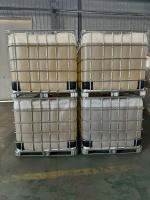
From an operational perspective, PolyDADMAC is supplied as a liquid polymer with controlled molecular weight and charge density. It is easy to handle, store, and dose using standard chemical feed systems. Proper mixing is essential to ensure rapid dispersion and uniform contact with suspended particles. Rapid mixing zones are typically used for initial coagulation, followed by gentle agitation to promote floc formation.
In advanced paper mill systems, PolyDADMAC is often integrated with other retention and drainage aids. In such systems, it works synergistically with high-molecular-weight flocculants and microparticle systems to optimize retention, drainage, and formation. This integrated chemical program enhances overall paper machine performance and product quality.
Environmental considerations are increasingly important in the pulp and paper industry. PolyDADMAC supports sustainable water management by enabling higher rates of water recycling and reducing freshwater consumption. It also reduces sludge volume compared with inorganic coagulants, minimizing disposal challenges and environmental impact. However, careful control of residual polymer levels is necessary to ensure compliance with environmental regulations for discharge or reuse.
In conclusion, PolyDADMAC is a highly effective and versatile polymer for wastewater recycling in the pulp and paper industry. Its strong cationic charge enables efficient neutralization of fibers, fillers, and dissolved organic matter, significantly improving water clarification and reuse efficiency. Through optimized application in white water systems, effluent treatment, and process water loops, PolyDADMAC enhances resource efficiency, reduces operational costs, and supports sustainable water management in modern paper production systems.
163_small.jpg "the application of polydadmac application in drinking water purification")
322_small.jpg "polydadmac (FL4440)with 50% solid content and 1000-3000 CPS viscosity from Chinafloc")