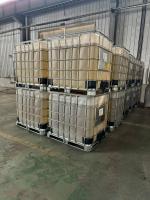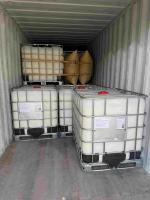


Our Products

coagulant / high molecular weight polyamine for wastewater treatment|polyamine manufacturer
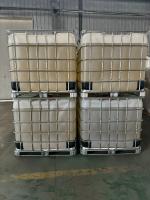
1. Introduction to High Molecular Weight Polyamine
High molecular weight polyamine is an effective cationic organic polymer widely used in industrial wastewater treatment, municipal sewage treatment, sludge dewatering, and solid-liquid separation. Due to its positively charged functional groups, high molecular weight polyamine can neutralize negatively charged suspended particles, colloids, and organic contaminants in wastewater, promoting aggregation and improving separation efficiency.
In many industrial wastewater treatment systems, fine suspended solids, emulsified oils, dyes, and dissolved organic substances are difficult to remove using conventional sedimentation alone. High molecular weight polyamine helps improve treatment performance by destabilizing colloidal particles and facilitating the formation of larger aggregates. Depending on its molecular structure, charge density, molecular weight, and application conditions, it can function as a primary coagulant, a flocculation aid, or a sludge conditioning agent.
For industrial users seeking reliable wastewater treatment chemicals, high molecular weight polyamine offers an alternative or complement to inorganic coagulants such as polyaluminum chloride (PAC) and ferric chloride.
2. How High Molecular Weight Polyamine Works
The wastewater treatment performance of high molecular weight polyamine depends primarily on charge neutralization, adsorption, and, for suitable polymer structures, particle bridging.
Charge neutralization: Many suspended particles and colloids in wastewater carry negative surface charges. These charges create electrostatic repulsion that prevents particles from combining naturally. Cationic polyamine adsorbs onto particle surfaces and reduces this repulsion, allowing particles to aggregate.
Adsorption and aggregation: Polyamine molecules interact with suspended solids, organic matter, and other negatively charged substances. These interactions encourage small particles to form larger aggregates that can be removed through sedimentation, flotation, or filtration.
Polymer bridging: Some higher-molecular-weight polyamine formulations can contribute to bridging between particles when their molecular structures and adsorption behavior are suitable. However, bridging performance depends on the specific product. Polyacrylamide generally offers more pronounced long-chain bridging in many flocculation applications.
Sludge conditioning: High molecular weight polyamine can improve the aggregation of fine sludge particles, potentially increasing sludge permeability and improving water release during mechanical dewatering.
The actual results depend on wastewater composition, pH, temperature, suspended solids concentration, polymer characteristics, and dosage. Therefore, laboratory jar testing is essential before selecting a commercial grade.
3. Major Applications of High Molecular Weight Polyamine
3.1 Municipal Wastewater Treatment
Municipal wastewater contains suspended solids, organic matter, colloidal particles, and microorganisms. High molecular weight polyamine can be used in primary treatment, tertiary clarification, and sludge conditioning where appropriate.
In primary clarification, polyamine can help destabilize fine suspended particles and improve settling. When used with PAC or another suitable coagulant, it may improve floc formation and suspended solids removal.
In tertiary treatment, high molecular weight polyamine can support the removal of residual colloids and fine particles before filtration or other polishing processes. Its effectiveness in removing dissolved organic contaminants depends on their chemical characteristics and the overall treatment process.
3.2 Industrial Wastewater Treatment
Industrial wastewater varies considerably according to the manufacturing process. High molecular weight polyamine is particularly relevant when wastewater contains negatively charged colloids, fine solids, or substances that respond well to cationic coagulation.
Common applications include:
-
Chemical manufacturing wastewater treatment.
-
Food and beverage processing wastewater.
-
Paper and pulp wastewater clarification.
-
Textile dyeing and finishing wastewater.
-
Pharmaceutical manufacturing wastewater.
-
Metal processing and electroplating wastewater.
-
General industrial wastewater clarification.
In these applications, polyamine may reduce turbidity and suspended solids and improve downstream separation. However, wastewater containing heavy metals, toxic compounds, or high concentrations of dissolved salts may require additional treatment technologies.
3.3 Textile and Dyeing Wastewater
Textile wastewater may contain dyes, sizing agents, fibers, surfactants, and suspended particles. Some dye molecules and colloidal materials carry negative charges, making cationic polyamine a useful candidate for coagulation.
High molecular weight polyamine can help destabilize dye-containing particles, improve color removal, and promote the separation of suspended matter. It may be used alone or combined with PAC, ferric salts, or other treatment chemicals.
Performance varies significantly between reactive, direct, acid, and other dye systems. Some dissolved dyes are difficult to remove through coagulation alone, so jar tests should measure both color reduction and residual turbidity.
3.4 Paper and Pulp Industry
Paper mills generate wastewater containing cellulose fibers, fines, fillers, coating materials, and organic substances. High molecular weight polyamine can assist in the clarification of process water and wastewater by promoting the aggregation of negatively charged suspended materials.
Improved clarification can support water recycling, reduce the solids load on downstream treatment equipment, and help stabilize wastewater treatment performance.
For applications focused on fiber retention or fine-particle bridging, a suitable cationic or anionic polyacrylamide may be more appropriate. Product selection should reflect whether the main objective is charge neutralization, floc formation, or process-water retention.
3.5 Sludge Dewatering
Sludge dewatering is one of the important applications of cationic polymers. Waste activated sludge, industrial biological sludge, and certain chemical sludges often contain fine particles that retain significant amounts of water.
High molecular weight polyamine may improve sludge aggregation and facilitate water separation in filter presses, centrifuges, belt filter presses, and other dewatering equipment. Depending on the sludge type, it can be applied alone or in combination with cationic polyacrylamide.
A suitable treatment program may improve cake formation, filtrate clarity, and equipment throughput. Nevertheless, high molecular weight polyamine is not automatically superior to cationic polyacrylamide for sludge dewatering. Comparative testing should evaluate cake solids, polymer consumption, filtrate quality, and operating costs.
3.6 Mining and Mineral Processing Wastewater
Mining operations produce wastewater containing fine mineral particles, clay, suspended solids, and process chemicals. High molecular weight polyamine can be considered for the coagulation of negatively charged mineral suspensions and the clarification of process water.
Potential applications include mineral processing wastewater, tailings-water clarification, ore washing water, and selected recycling circuits.
In many mineral-processing operations, polyamine is used as a coagulant in combination with a high-molecular-weight anionic polyacrylamide flocculant. The polyamine destabilizes fine particles, while the polyacrylamide promotes the formation of larger flocs. This combined approach may improve settling and water recovery, although the optimum combination must be established experimentally.
4. Advantages of High Molecular Weight Polyamine
High molecular weight polyamine offers several potential advantages for wastewater treatment.
First, its cationic charge can provide effective charge neutralization for negatively charged colloids and suspended particles. Second, it may improve clarification and reduce residual turbidity when applied at an appropriate dosage. Third, it can be compatible with PAC, ferric salts, and other treatment chemicals, allowing operators to develop combined treatment programs.
Another advantage is its potential use across multiple treatment stages, including primary clarification, industrial wastewater pretreatment, and sludge conditioning. Certain formulations can also operate effectively over a useful range of pH conditions, although the actual operating window depends on product chemistry.
Commercial products are available in different molecular weights, charge densities, viscosities, and solid concentrations. Liquid formulations can be convenient for automated dosing, while concentrated products may reduce storage and transportation requirements. Product selection should consider handling safety, dilution requirements, and total treatment cost.
5. How to Select the Right High Molecular Weight Polyamine
Choosing the correct high molecular weight polyamine requires more than comparing molecular weight or price. Important parameters include:
Molecular weight: A higher molecular weight does not always guarantee better coagulation. The best grade depends on particle characteristics and the required separation process.
Charge density: Higher cationic charge can improve charge neutralization in some wastewater systems, but excessive charge may cause overdosing, restabilization, or increased chemical consumption.
Solid content: Common commercial formulations vary in active solids concentration. Compare products on an active-polymer basis rather than by liquid product weight alone.
Viscosity: Viscosity affects pumping, dilution, mixing, and dosing. Highly viscous products may require additional preparation and handling controls.
Compatibility: Determine whether the polyamine should be used alone or combined with PAC, ferric chloride, or polyacrylamide.
Operating conditions: Consider pH, temperature, salinity, wastewater flow rate, solids concentration, and the available separation equipment.
A practical selection process should include jar testing, dosage optimization, and a pilot trial where necessary.
6. Dosage and Application Methods
The optimum dosage of high molecular weight polyamine varies according to wastewater composition and product concentration. There is no universal dosage suitable for every treatment system.
For preliminary laboratory screening, operators can test several concentrations across a broad range, such as 1–50 mg/L of active polymer where appropriate for the wastewater. This is only an initial screening range, not a recommended operating dosage; highly contaminated wastewater or specialized applications may require different concentrations.
Prepare the product according to the supplier's instructions, add it gradually under controlled mixing, and observe floc formation, settling speed, supernatant clarity, and sludge characteristics. Excessive dosage should be avoided because it can increase costs and sometimes worsen separation.
For plant-scale operation, dosing should be adjusted according to influent quality, flow rate, and treatment results. Operators should follow the supplier's safety data sheet and avoid uncontrolled mixing with incompatible chemicals.
7. High Molecular Weight Polyamine vs. Polyacrylamide
High molecular weight polyamine and polyacrylamide are both used in wastewater treatment, but they serve different roles.
Polyamine is typically a cationic coagulant that neutralizes particle charges and destabilizes colloids. Polyacrylamide is available in cationic, anionic, nonionic, and other specialized forms. Its long polymer chains can promote particle bridging and produce larger, stronger flocs in suitable applications.
For wastewater containing fine colloids, polyamine may be an effective first-stage treatment chemical. For sludge dewatering or high-rate solids settling, cationic or anionic polyacrylamide may provide better performance, depending on the solids and process conditions. In many cases, using polyamine and polyacrylamide together can produce better results than relying on either chemical alone.
8. Conclusion
High molecular weight polyamine is a versatile cationic polymer for wastewater treatment, particularly where charge neutralization and colloidal destabilization are important. Its applications include municipal sewage clarification, industrial wastewater treatment, textile wastewater color removal, paper mill water clarification, sludge conditioning, and mining wastewater treatment.
The best results depend on selecting the correct molecular weight, charge density, solid content, and dosage for the specific wastewater. A structured jar test is the most reliable starting point for determining performance and chemical consumption.
For wastewater treatment plants and industrial manufacturers, selecting a suitable high molecular weight polyamine can help improve solid-liquid separation, support water recycling, and optimize treatment costs. Comparing polyamine with PAC, ferric salts, and polyacrylamide under actual operating conditions is the best way to identify the most economical treatment solution.
您可能也会感兴趣。
AirOps
Turn LLM Citations Into Pipeline
SEO built for ChatGPT and Claude. AirOps turns citations into pipeline. See it live.