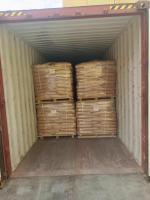
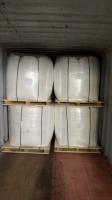
Our Products
Polyacrylamide / The substituation of PRAESTOL 2640 can be replaced by Chinafloc A2527
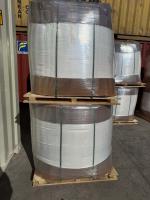



PRAESTOL 2640 is a high–molecular weight anionic polyacrylamide (APAM) flocculant produced by Solenis (formerly Stockhausen). It is supplied mainly in powder form and sometimes as an emulsion, designed for applications that require strong particle bridging, rapid settling, and efficient solid–liquid separation. Due to its anionic charge and long polymer chain structure, PRAESTOL 2640 is particularly effective for treating inorganic suspensions, mineral slurries, and negatively charged fine particles, making it widely used in water treatment, mining, sludge dewatering, papermaking, oilfield operations, and various industrial processes.
The primary working mechanism of PRAESTOL 2640 is polymer bridging flocculation, where long polymer chains adsorb onto multiple particles at once, forming large and dense flocs that settle quickly or separate easily under mechanical forces.
One of the most important applications of PRAESTOL 2640 is in municipal water treatment plants, especially as a coagulant aid used in combination with inorganic coagulants such as aluminum sulfate (alum), polyaluminum chloride (PAC), and ferric salts.
In raw water clarification, suspended solids, clays, and colloidal silica carry negative charges and remain stable in water. After adding an inorganic coagulant to neutralize surface charges, PRAESTOL 2640 is introduced to enhance floc growth and settling speed. Its long molecular chain connects microflocs into large, compact aggregates, resulting in:
Faster sedimentation velocity
Lower turbidity in clarified water
Improved filtration efficiency
Reduced filter backwashing frequency
Lower chemical consumption
PRAESTOL 2640 is also used in drinking water sludge thickening and dewatering, where it improves water release from mineral sludge, reducing disposal volume and operational costs.
PRAESTOL 2640 plays a crucial role in wastewater treatment, particularly where the suspended solids are mainly inorganic or mineral in nature. It is widely applied in:
Sand washing wastewater
Stone and aggregate washing plants
Ceramic and glass manufacturing effluents
Power plant desulfurization wastewater
Construction slurry and tunnel wastewater
In these applications, PRAESTOL 2640 efficiently aggregates fine sand, clay, ash, and mineral particles, producing fast-settling flocs and clear supernatant water. Compared with cationic flocculants, anionic PRAESTOL 2640 shows superior performance in systems with low organic content and high inorganic solids.
In industrial wastewater clarification, PRAESTOL 2640 helps reduce:
Total suspended solids (TSS)
Turbidity
Chemical oxygen demand (COD) from particulate organics
Equipment fouling and sludge accumulation
It is also widely applied in dissolved air flotation (DAF) systems, usually together with PAC or iron salts, to enhance microfloc formation and improve flotation separation.
Another major application area of PRAESTOL 2640 is sludge thickening and mechanical dewatering, especially for inorganic or mixed sludges. These include:
Primary sedimentation sludge
Chemical precipitation sludge
Lime sludge
Metal hydroxide sludge
Mixed municipal–industrial sludge
PRAESTOL 2640 is used in:
Gravity thickeners
Belt filter presses
Centrifuges
Plate-and-frame filter presses
Its high molecular weight enables strong bridging between sludge particles, forming large flocs with excellent permeability. This results in:
Higher sludge cake dryness
Lower filtrate turbidity
Reduced polymer dosage
Improved dewatering equipment capacity
Reduced energy consumption
Because PRAESTOL 2640 is anionic, it is most effective in systems where sludge particles have been pre-neutralized by metal salts, allowing the polymer to perform primarily as a bridging agent.
PRAESTOL 2640 is extensively used in mining and mineral beneficiation, where efficient solid–liquid separation is critical for both economic and environmental reasons. It is commonly applied in the processing of:
Coal
Iron ore
Copper
Gold
Bauxite
Phosphate
Silica sand
In these operations, PRAESTOL 2640 is used for:
Tailings thickening
Clarification of process water
Concentrate dewatering
Backfill preparation
Fine mineral particles are difficult to settle naturally due to their small size and electrostatic stability. PRAESTOL 2640 effectively bridges these particles into large flocs, enabling rapid sedimentation and overflow water clarification. This allows:
Reuse of clarified water in the process
Increased tailings dam capacity
Reduced environmental discharge load
Improved plant water balance and cost control
In the papermaking industry, PRAESTOL 2640 is applied mainly as a retention and drainage aid, especially in systems that rely heavily on mineral fillers such as calcium carbonate and kaolin.
Its key benefits include:
Improved retention of fines and fillers
Faster water drainage on the wire section
Reduced loss of valuable raw materials
Lower white water solids concentration
Enhanced paper formation and uniformity
PRAESTOL 2640 is widely used in the production of writing paper, packaging paper, corrugated paper, and specialty industrial paper, helping improve machine efficiency and product quality while reducing wastewater pollution load.
In the oil and gas industry, PRAESTOL 2640 is applied in several key processes:
Drilling fluid treatment
Oilfield wastewater clarification
Produced water solid separation
Refinery wastewater primary clarification
It is particularly effective for aggregating inorganic drilling cuttings, clay particles, and suspended solids in oilfield water systems. By accelerating sedimentation and improving clarification, PRAESTOL 2640 supports water recycling, reinjection, and environmental compliance.
Large infrastructure projects generate massive volumes of slurry and muddy wastewater containing cement, bentonite, clay, and fine sand. PRAESTOL 2640 is widely used in:
Shield tunneling slurry separation
Piling and foundation construction wastewater
Metro and underground engineering projects
It rapidly flocculates fine solids, producing clear water suitable for reuse, while reducing sediment disposal volume and improving project efficiency.
PRAESTOL 2640 offers several practical performance advantages:
Very high molecular weight for strong bridging
Excellent performance in inorganic suspensions
Fast settling and clear supernatant
Low dosage requirement
Wide pH adaptability
Good compatibility with PAC, alum, and ferric salts
Stable performance under varying water conditions