


Our Products

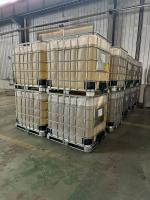
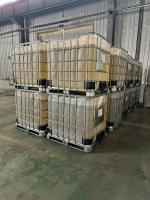
coagulant / Polyamine(FL3240)used for Mineral washing water recycling|polyamine suppliers
1. Introduction to Polyamine for Mineral Washing Water Recycling
Polyamine is a liquid cationic polymer coagulant widely used in industrial wastewater treatment, mineral processing, and solid-liquid separation. It is particularly useful for treating wastewater containing negatively charged suspended particles, fine clay, colloidal substances, and mineral impurities.
In the mineral processing industry, large quantities of water are consumed during ore washing, sand washing, clay washing, and mineral separation. These processes generate wastewater containing fine particles of silica, clay, iron oxide, and other mineral substances.
Discharging untreated wastewater can increase environmental pollution and operating costs. Therefore, mineral washing water recycling has become an important part of modern mineral processing operations.
Polyamine for mineral washing water recycling helps destabilize suspended particles, improve coagulation, and accelerate solid-liquid separation. The clarified water can then be collected and reused in mineral washing operations.
2. How Does Polyamine Work in Mineral Washing Water Treatment?
Most fine mineral particles and clay particles carry negative surface charges. These charges create electrostatic repulsion, preventing particles from naturally aggregating and settling.
Polyamine contains positively charged functional groups that interact with negatively charged particles.
Its treatment mechanism mainly involves:
Charge neutralization: Polyamine reduces the negative surface charge of suspended particles, allowing them to approach each other.
Coagulation: Fine particles aggregate into smaller clusters, making subsequent separation easier.
Improved sedimentation: The aggregated particles can settle more efficiently in sedimentation tanks and thickeners.
Water clarification: Suspended solids are removed from the water, improving its quality for recycling.
Polyamine is particularly useful as a primary coagulant. For wastewater containing extremely fine mineral particles, it can be combined with anionic polyacrylamide (APAM) to improve floc formation.
3. Main Applications of Polyamine in Mineral Washing Water Recycling
Kaolin, bentonite, and other clay minerals contain fine particles that can remain suspended in water for long periods.
Polyamine can help neutralize the surface charges of these particles, promoting aggregation and improving clarification.
Its potential benefits include:
-
Reducing wastewater turbidity.
-
Improving clay particle settling.
-
Supporting water recovery.
-
Reducing suspended-solids concentrations.
-
Improving recycling efficiency.
3.2 Sand Washing Water Recycling
Sand washing plants generate wastewater containing silica, fine sand, silt, and clay.
Polyamine can be added to the wastewater before sedimentation to improve the aggregation of fine particles.
The settled solids can be removed from the bottom of the treatment tank, while clarified water is collected and returned to the sand washing system.
This helps reduce freshwater consumption and wastewater discharge.
3.3 Mineral Tailings Water Treatment
Mineral processing operations generate tailings containing fine mineral particles and residual process chemicals.
Polyamine can be evaluated as a coagulant to improve tailings water clarification.
It can help improve suspended-solids removal and facilitate water recovery from tailings streams.
This application is relevant to iron ore, copper ore, phosphate, and other mineral processing industries.
3.4 Iron Ore Washing Wastewater
Iron ore washing wastewater contains iron oxide particles, silica, clay, and other suspended mineral substances.
Polyamine can help destabilize colloidal particles and improve sedimentation.
When combined with an appropriate anionic polyacrylamide, it may produce larger flocs and improve the efficiency of thickening and water recycling.
3.5 Copper and Phosphate Mineral Processing
Copper and phosphate processing operations generate wastewater containing fine mineral particles and suspended impurities.
Polyamine can be considered for primary coagulation before sedimentation or filtration.
However, the presence of flotation reagents, dissolved salts, and other process chemicals must be considered when selecting the appropriate polymer.
4. Advantages of Polyamine for Mineral Washing Water Recycling
Polyamine offers several potential advantages:
1. Fast coagulation
Its cationic properties help destabilize negatively charged particles and promote initial aggregation.
2. Improved water clarity
It helps remove fine suspended particles, reducing wastewater turbidity.
3. Better compatibility with anionic PAM
Polyamine can act as a primary coagulant, while anionic PAM promotes polymer bridging and larger floc formation.
4. Reduced freshwater consumption
Clarified water can be recycled into mineral washing operations, reducing dependence on fresh water.
5. Improved sludge separation
Coagulation can facilitate sedimentation and subsequent sludge handling.
6. Flexible applications
Polyamine can be evaluated in clay washing, sand washing, ore washing, and mineral tailings water treatment.
5. Combining Polyamine with Anionic Polyacrylamide
|
Chemical |
Main function |
|---|---|
|
Polyamine |
Charge neutralization and primary coagulation |
|
Anionic PAM |
Polymer bridging and floc formation |
A typical treatment process includes:
-
Collect mineral washing wastewater in an equalization tank.
-
Add polyamine under rapid mixing.
-
Allow initial coagulation.
-
Add diluted anionic polyacrylamide.
-
Mix slowly to develop larger flocs.
-
Allow flocs to settle in a sedimentation tank or thickener.
-
Collect clarified water for recycling.
The order and dosage should be optimized through jar tests. Excessive polyamine can reverse particle charges, while excessive anionic PAM may produce sticky or weak flocs.
6. Recommended Polyamine Dosage for Mineral Washing Water
The optimum dosage depends on mineral type, suspended-solids concentration, particle size, pH, and water chemistry.
For preliminary laboratory evaluation, the following ranges can be used:
|
Treatment chemical |
Initial screening dosage |
|---|---|
|
Polyamine |
5–50 mg/L |
|
Anionic PAM |
0.2–3 mg/L |
These are experimental starting ranges, not universal manufacturer recommendations.
The actual dosage should be determined through jar testing using the customer's wastewater.
Important evaluation parameters include turbidity removal, settling velocity, floc strength, sludge volume, and recycled water quality.
7. How to Select Polyamine for Mineral Processing
When selecting polyamine for mineral washing water recycling, several technical characteristics should be considered:
-
Solid content: Common commercial polyamine formulations vary in active content. Select according to the required treatment efficiency and transportation costs.
-
Molecular weight: Molecular weight and polymer structure influence adsorption and coagulation behavior.
-
Viscosity: Viscosity affects pumping, dosing, and handling.
-
Cationic charge: Charge density influences particle destabilization.
-
Water compatibility: The product should dissolve or disperse properly under the actual operating conditions.
For Chinafloc, liquid polyamine products such as FL3240 can be evaluated as primary coagulants for mineral washing water recycling.
8. Conclusion
Polyamine is an important candidate chemical for mineral washing water recycling, particularly in applications involving clay particles, silica, suspended mineral solids, and colloidal impurities.
Its primary function is charge neutralization and coagulation. When combined with anionic polyacrylamide, it can improve floc formation, settling performance, and solid-liquid separation.
For mineral processing plants, using polyamine can help improve recycled water quality, reduce freshwater consumption, and support more efficient wastewater management.
913_small.jpg "polyamine water treatment|polyamine coagulant|cationic polyamine polymer")
201_small.jpg "polyamine coagulant supplier|cationic polyamine flocculant")