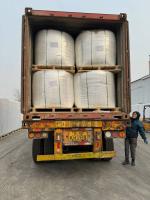
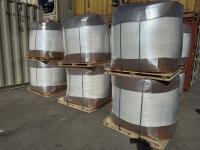
Anionic polyacrylamide MAGNAFLOC-5250 is a high-molecular-weight anionic flocculant widely used in solid–liquid separation processes across water treatment, mining, mineral processing, industrial wastewater management, and various slurry handling operations. Because of its strong anionic charge density and long polymer chains, anionic polyacrylamide MAGNAFLOC-5250 delivers highly efficient particle bridging, settling enhancement, sludge dewatering, and clarification performance in complex systems containing suspended solids, colloids, and fine minerals. The application of anionic polyacrylamide MAGNAFLOC-5250 revolves around its ability to dramatically increase floc size, accelerate separation, reduce turbidity, and improve the operational economics of treatment systems.
One major application of anionic polyacrylamide MAGNAFLOC-5250 is in mining and mineral processing, where it is extensively used for tailings treatment, concentrate thickening, and clarification of process water. In operations such as iron ore, gold, copper, nickel, phosphate, bauxite, and rare-earth processing, fine particles in the slurry can seriously affect settling rates. Anionic polyacrylamide MAGNAFLOC-5250 helps agglomerate ultra-fine minerals into larger flocs, allowing rapid settling in thickeners and clarifiers. This provides clearer overflow water for recirculation and reduces underflow moisture, which improves tailings handling efficiency. In tailings ponds, the use of anionic polyacrylamide MAGNAFLOC-5250 promotes faster consolidation, reducing storage costs and enhancing environmental compliance. Mines prefer this grade because anionic polyacrylamide MAGNAFLOC-5250 performs consistently in slurries with high solids concentration and varying pH.
Another important application of anionic polyacrylamide MAGNAFLOC-5250 is in potable water treatment and municipal wastewater purification, especially in primary clarification, secondary clarification, and sludge dewatering. When raw water contains high turbidity, clay, silt, and organic colloids, anionic polyacrylamide MAGNAFLOC-5250 is used as a flocculant following coagulation with aluminium salts, ferric salts, or polyaluminium chloride. The polymer forms larger, denser flocs that settle more quickly, reducing turbidity and improving the production of clean, potable water. In municipal wastewater treatment, anionic polyacrylamide MAGNAFLOC-5250 enhances settling in secondary clarifiers, minimizes sludge blanket disturbances, and improves sludge dewatering on belt presses, decanters, screw presses, and centrifuges. This reduces sludge disposal costs, which is a major economic advantage.
The application of anionic polyacrylamide MAGNAFLOC-5250 is also widespread in industrial wastewater treatment, including effluents from textile factories, paper mills, food processing plants, chemical industries, tanneries, and petrochemical operations. Industrial wastewater frequently contains suspended solids, dyes, heavy metals, organic matter, and emulsified contaminants, many of which are difficult to separate using coagulation alone. Anionic polyacrylamide MAGNAFLOC-5250 forms strong flocs capable of capturing fine particles and stabilizing them into rapidly settling agglomerates. This flocculant significantly increases flotation efficiency in dissolved air flotation (DAF) systems and enhances sedimentation in primary and secondary settling tanks. In industries with high sludge generation, the polymer improves dewatering efficiency, resulting in drier cakes and lower transportation or landfill costs.
In the paper and pulp industry, the application of anionic polyacrylamide MAGNAFLOC-5250 focuses on improving retention and drainage. The polymer helps capture fines, fillers, and fibers, reducing losses and enhancing paper sheet formation. By improving drainage on the wire section, anionic polyacrylamide MAGNAFLOC-5250 reduces steam consumption in drying, contributing to energy savings. Furthermore, the polymer is used in wastewater treatment units within paper mills, where it improves effluent clarity and enhances sludge dewatering efficiency.
Anionic polyacrylamide MAGNAFLOC-5250 is also used in oil and gas operations, particularly in produced-water treatment, drilling fluid recycling, and refinery effluent management. Produced water typically contains suspended solids, hydrocarbons, and formation fines. The polymer creates stable flocs that improve separation in clarifiers and hydrocyclone systems. In drilling mud systems, it helps reclaim solids and maintain the fluid quality required for effective drilling. Refinery wastewater streams benefit from anionic polyacrylamide MAGNAFLOC-5250 due to its ability to handle oily solids and surfactant-containing effluents.
In agriculture and irrigation water treatment, anionic polyacrylamide MAGNAFLOC-5250 reduces sediment transport in channels, stabilizes soil particles, and improves water clarity. It is occasionally applied in irrigation reservoirs, especially during high turbidity events, to ensure efficient sedimentation.
Another emerging application of anionic polyacrylamide MAGNAFLOC-5250 is in construction and tunneling, where it assists in separation of bentonite, clay, and silt from slurry systems used in diaphragm wall construction, HDD drilling, and tunnel boring machines (TBM). The polymer improves the performance of desanders and desilters, enhances water recycling, and reduces disposal costs.
Across all industries, the application of anionic polyacrylamide MAGNAFLOC-5250 is driven by its excellent floc strength, fast settling characteristics, compatibility with coagulants, and stability over a wide pH and temperature range. It delivers cost savings by reducing chemical consumption, minimizing sludge volumes, increasing water reuse, and improving process efficiency.