c These particles—such as clay, silt, organic matter, microorganisms, oils, and colloids—typically carry negative surface charges, which cause them to repel each other and remain suspended. Because of their small size and electrostatic stability, they cannot be removed effectively by simple sedimentation or filtration.
The primary function of a coagulant is to neutralize or reduce these surface charges, allowing particles to collide, attach, and form larger aggregates known as micro-flocs. Once coagulation occurs, the aggregated particles can be removed through sedimentation, flotation, filtration, or further flocculation using high-molecular-weight polymers.
Coagulation is a critical first step in many solid–liquid separation processes and is widely applied in drinking water treatment, wastewater treatment, industrial processes, mining, papermaking, and oilfield operations.
Main Types of Coagulant Products
Coagulants can be broadly classified into inorganic coagulants and organic (polymeric) coagulants, each with distinct characteristics and performance profiles.
1. Inorganic Coagulants
Inorganic coagulants are traditional, mineral-based chemicals that have been used for decades.
Common Inorganic Coagulants
Characteristics
-
Work mainly through charge neutralization and sweep flocculation
-
Effective for turbidity and suspended solids removal
-
Relatively low cost and widely available
-
Produce large volumes of chemical sludge
-
Performance is often pH-dependent
-
Can increase dissolved salts and residual metals in treated water
Inorganic coagulants are still widely used in municipal water treatment and some industrial applications, especially where raw water quality is relatively stable and chemical costs are a priority.
2. Organic Polymeric Coagulants
Organic coagulants are synthetic, water-soluble polymers with cationic functional groups. They are increasingly used due to higher efficiency and lower sludge production.
Main Organic Coagulant Products
(1) Polyamine
-
Medium to high cationic charge density
-
Low to medium molecular weight
-
Effective for charge neutralization
-
Often used as a primary coagulant
-
Produces less sludge than inorganic salts
-
Effective over a wide pH range
(2) Polydadmac (PolyDADMAC)
-
Strong cationic polymer with permanent positive charge
-
Low molecular weight, very fast acting
-
Excellent for turbidity, color, and organic removal
-
Widely used in drinking water treatment
-
Very stable and easy to dose
-
Can be used alone or with flocculants
(3) Cationic Polyacrylamide (Low MW Grades)
Characteristics of Organic Coagulants
-
Require lower dosage than inorganic coagulants
-
Produce less sludge
-
Less sensitive to pH and temperature
-
Easier handling and more consistent performance
-
Higher unit cost, but often lower overall treatment cost
Main Applications of Coagulants
Coagulants are essential in a wide range of industries and processes. Their applications can be categorized as follows:
1. Drinking Water Treatment
In drinking water plants, coagulants are used to remove:
Polydadmac and polyamine are commonly used as primary coagulants or coagulant aids, often in combination with PAC or alum. They help improve clarification efficiency, reduce chemical sludge, and enhance filter performance.
2. Municipal Wastewater Treatment
In municipal sewage treatment, coagulants are applied to:
-
Remove suspended solids
-
Improve primary clarification
-
Enhance phosphorus removal
-
Condition sludge before dewatering
Organic coagulants are especially useful where space is limited or sludge reduction is required. They improve settling velocity and reduce load on downstream biological systems.
3. Industrial Wastewater Treatment
Coagulants are widely used in treating wastewater from:
-
Chemical plants
-
Textile and dyeing factories
-
Paper mills
-
Food and beverage industries
-
Metal finishing and electroplating plants
They help remove:
Polyamine and polydadmac are preferred due to their fast action and adaptability to complex wastewater compositions.
4. Sludge Conditioning and Dewatering
Before mechanical dewatering (centrifuges, belt presses, filter presses), coagulants are used to:
-
Neutralize sludge particle charges
-
Improve water release
-
Reduce polymer consumption
-
Increase cake solids content
They are often used together with high-molecular-weight flocculants to optimize dewatering efficiency.
5. Papermaking Industry
In papermaking, coagulants play a key role in:
-
Pitch and stickies control
-
Fixation of fines and fillers
-
Retention of additives
-
White water clarification
Polydadmac and polyamine are commonly used as fixatives, improving machine runnability, paper quality, and system cleanliness.
6. Mining and Mineral Processing
In mining operations, coagulants are used for:
-
Tailings water clarification
-
Thickener feed conditioning
-
Recycling of process water
They improve the aggregation of ultrafine mineral particles, enhancing sedimentation and reducing water losses.
7. Oilfield and Energy Applications
In oil and gas operations, coagulants are applied in:
They help separate emulsified oil, solids, and suspended matter, enabling water reuse or compliant discharge.

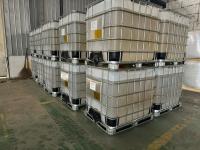



127_small.jpg "The equivalent of CLARIFLOC C-4408 CLARIFLOC C-4410 and CLARIFLOC C-4411")
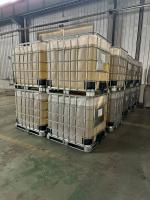
358_small.jpg "PolyDADMAC for river water clarification|polydadmac with NSF")