

Our Products

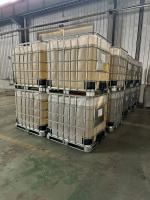
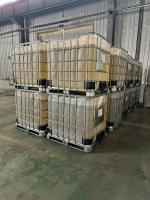
coagulant / 20-65% solid content of polyamine manufacturer|polyamine for water treatment and mining
1. Introduction to Polyamine
Polyamine is a water-soluble cationic polymer widely used in industrial water treatment, municipal wastewater treatment, mining, mineral processing, and sludge conditioning. It is valued for its ability to neutralize negatively charged particles, destabilize colloidal suspensions, and improve solid-liquid separation.
Commercial polyamine products are commonly supplied as liquid solutions with different solid contents. Polyamine with 20–65% solid content can be considered for applications requiring different concentrations, transportation characteristics, storage conditions, and chemical dosing requirements. However, the actual available concentration depends on the manufacturer's formulation, polymer chemistry, and viscosity limitations.
In water treatment and mining, polyamine is mainly used as a primary organic coagulant or charge-neutralizing agent. It can be applied alone in suitable systems or combined with inorganic coagulants, such as polyaluminum chloride (PAC), and polymeric flocculants, such as anionic polyacrylamide (APAM).
2. Polyamine for Industrial Wastewater Treatment
One of the major applications of polyamine is industrial wastewater treatment. Industrial effluents frequently contain suspended solids, colloidal particles, emulsified substances, and negatively charged organic materials that are difficult to remove by sedimentation alone.
Polyamine works primarily through charge neutralization. Its positively charged groups interact with negatively charged particles, reducing electrostatic repulsion and allowing particles to aggregate.
Typical applications include chemical manufacturing wastewater, petrochemical wastewater, paper mill effluent, textile wastewater, food processing wastewater, and general industrial wastewater clarification.
The main benefits of using polyamine for water treatment include improved suspended-solids removal, reduced turbidity, faster clarification in suitable systems, and improved performance of downstream filtration.
In some applications, polyamine can also reduce the demand for inorganic coagulants or improve their effectiveness. The actual chemical savings depend on the wastewater composition and the treatment process.
3. Polyamine for Municipal Water and Sewage Treatment
Polyamine is used in selected municipal water and wastewater treatment systems as a coagulant or coagulation aid.
For raw-water clarification, it can help destabilize colloidal particles and improve the removal of suspended matter. Depending on the water characteristics, polyamine may be used independently or alongside conventional coagulants.
In municipal wastewater treatment, polyamine can assist the removal of suspended solids and certain colloidal organic materials. It may also be used in sludge conditioning, depending on the formulation and the sludge characteristics.
Potential applications include preliminary clarification, tertiary wastewater treatment, filtration pretreatment, and sludge treatment.
For drinking-water applications, the specific product must be approved for the intended use and comply with applicable regulatory requirements. Product suitability should never be inferred from its solid content alone.
4. Polyamine for Sludge Dewatering
Sludge dewatering is another important application of polyamine. Wastewater treatment plants generate sludge containing microorganisms, organic matter, mineral particles, and large quantities of water.
Polyamine can neutralize negatively charged particles and promote aggregation, improving the separation of solids from water. In certain sludge systems, this can improve filterability and reduce the load on downstream dewatering equipment.
Typical equipment includes centrifuges, belt filter presses, screw presses, and filter presses.
Polyamine may be used as a standalone conditioning agent or combined with cationic polyacrylamide. In combination systems, polyamine can provide charge neutralization while polyacrylamide helps build larger flocs through polymer bridging.
The optimal combination depends on sludge composition, equipment design, polymer dosage, and operating conditions. Jar tests and dewatering trials should be conducted to compare filtrate clarity, cake solids, solids capture, and total chemical consumption.
5. Polyamine for Mining Wastewater Treatment
Mining operations generate wastewater containing clay, fine minerals, metal-bearing particles, and other suspended solids. Polyamine can support clarification when negatively charged colloids are difficult to destabilize.
Potential applications include mineral processing wastewater, ore washing water, tailings water clarification, coal washing wastewater, and recycling of process water.
In these systems, polyamine helps destabilize fine particles, allowing them to aggregate or become more responsive to a subsequent flocculant.
For example, a mining plant may first add polyamine to neutralize particle charges and then apply an appropriate anionic polyacrylamide to produce larger, faster-settling flocs.
This combination can improve solid-liquid separation and support process-water recovery. However, not every mineral suspension requires a polyamine coagulant. High-molecular-weight anionic polyacrylamide alone may be more economical and effective in some tailings systems.
6. Polyamine for Tailings Thickening and Water Recovery
Tailings management is an important challenge in mineral processing. Tailings often contain fine particles that settle slowly and retain substantial quantities of water.
Polyamine may be used as a primary coagulant to destabilize colloidal fines before the addition of a suitable flocculant. This approach can improve aggregation under appropriate conditions.
Potential benefits include improved clarification, better recovery of reusable process water, reduced suspended solids in overflow water, and improved performance of downstream thickening or filtration.
The best treatment program depends on mineralogy, particle-size distribution, water chemistry, pH, salinity, and the presence of residual processing chemicals.
For high-rate thickeners and large tailings facilities, laboratory testing should be followed by pilot-scale or plant trials. Settling velocity, underflow density, overflow clarity, and reagent cost per tonne of dry solids are important evaluation criteria.
7. Polyamine for Coal Washing and Mineral Beneficiation
Coal washing wastewater often contains fine coal particles, clay, and suspended mineral matter. These materials can remain dispersed and make water recycling difficult.
Polyamine can assist coagulation by neutralizing particle charges and improving the separation of suspended solids. It may be combined with anionic polyacrylamide to produce stronger flocs and improve settling.
Similar treatment strategies may be investigated for iron ore, copper, gold, phosphate, and other mineral-processing wastewater streams.
However, performance varies according to the surface chemistry of the minerals and the process-water composition. In some cases, inorganic coagulants or specialized mineral flocculants may offer better results.
8. Selecting Polyamine with 20–65% Solid Content
When selecting polyamine for water treatment and mining, solid content is only one of several important specifications.
A product with 20–30% solids may offer easier pumping and handling in certain formulations, while a product with 40–65% solids may provide more active material per unit of shipped product. Nevertheless, higher solid content does not automatically mean better treatment performance.
Important selection factors include molecular weight, cationic charge density, viscosity, pH, storage stability, compatibility with other chemicals, and the concentration of active polymer.
High-solids products may have greater viscosity and may require temperature control, suitable pumps, or dilution before dosing. Dilution procedures should follow the supplier's instructions.
For mining and wastewater applications, buyers should request a technical data sheet and evaluate the product under actual process conditions.
9. Dosage and Application Recommendations
The optimum polyamine dosage depends on suspended-solids concentration, particle charge, turbidity, pH, and the intended separation process. A universal dosage cannot be recommended for every wastewater or mining application.
A practical testing procedure is to prepare representative samples, test several polyamine dosages, and measure turbidity reduction, settling behavior, and sludge characteristics. If polyacrylamide is also required, its addition sequence and dosage should be optimized separately.
Operators should also consider the cost per unit of active polymer rather than comparing products only by price per kilogram of liquid product.
Conclusion
Polyamine with 20–65% solid content has potential applications in industrial wastewater treatment, municipal clarification, sludge conditioning, mining wastewater treatment, tailings thickening, coal washing, and mineral processing.
Its principal function is charge neutralization, which helps destabilize suspended particles and improves the effectiveness of subsequent solid-liquid separation. When combined with an appropriate polyacrylamide flocculant, polyamine can provide an effective treatment program for selected wastewater and mining systems.

998_small.jpg "China polyamine manufacturer|polyamine(20-50%) suppliers")